Sunpow Metal Detector: The Complete UK Buyer's Guide for 2026
A hands-on guide to the Sunpow metal detector range — covering specs, waterproof performance, and real-world use across British beaches and farmland. Updated for spring 2026.
What Is the Sunpow Metal Detector?
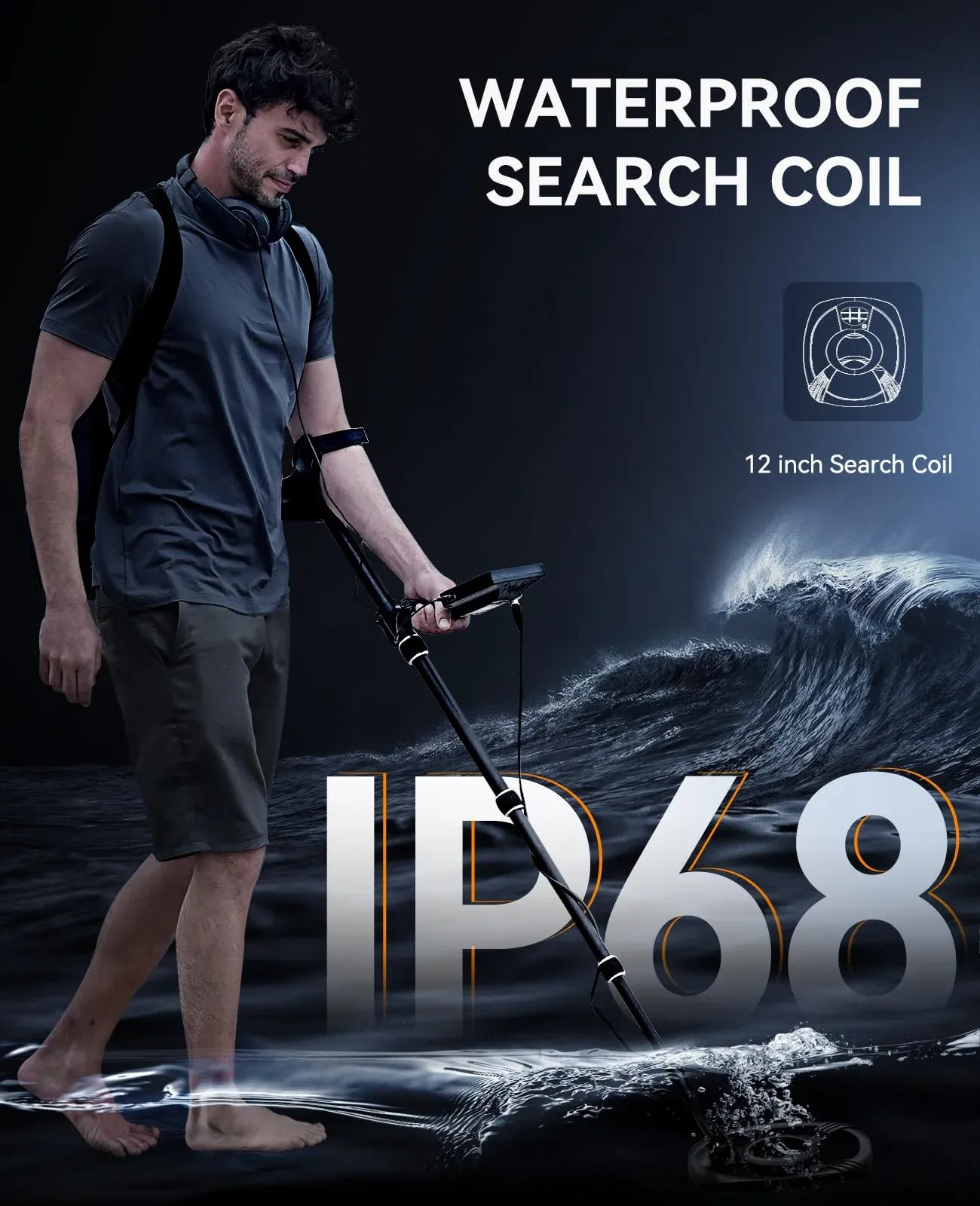
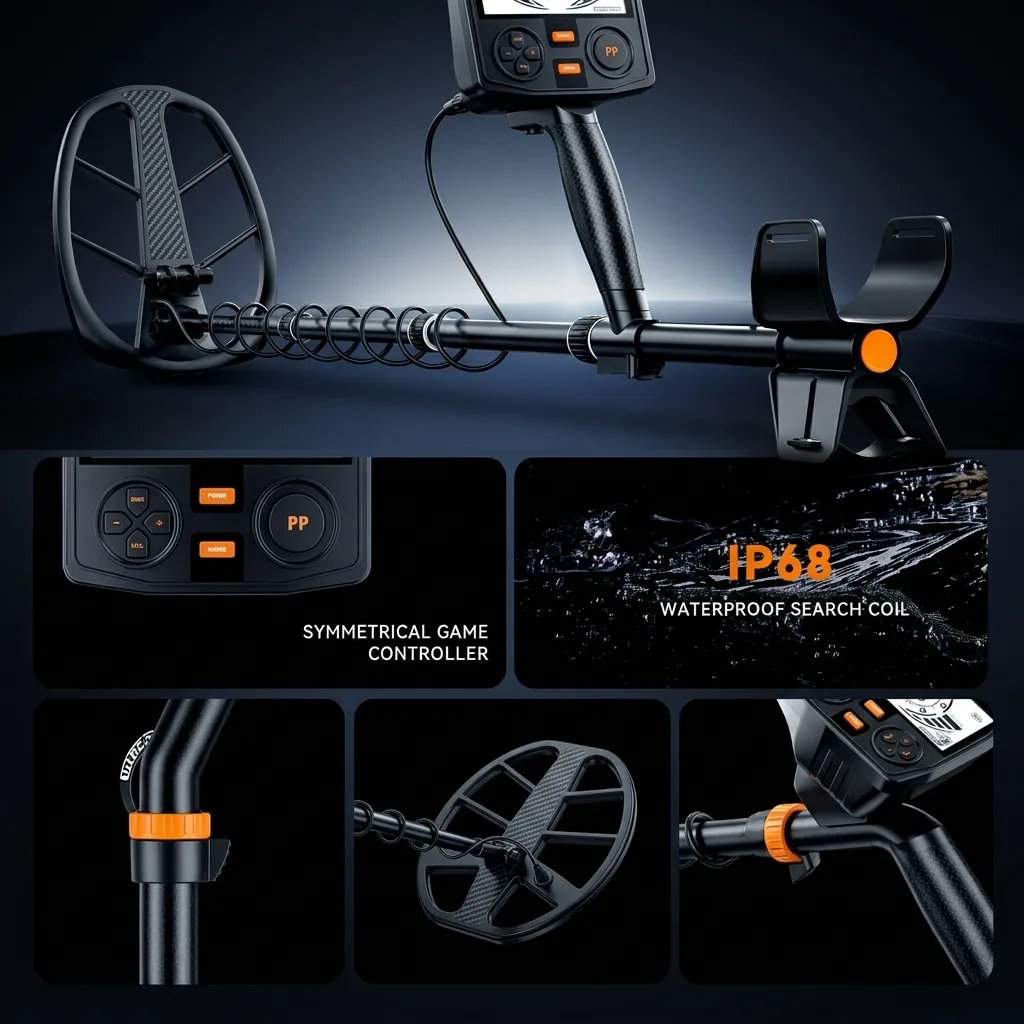
The Sunpow metal detector is a professional-grade detection unit built around advanced DSP (Digital Signal Processing) filtration and a fully waterproof 30cm search coil. It's designed specifically for the unpredictable conditions we deal with across the UK — wet sand, clay-heavy soil, and everything in between.
I picked one up last autumn after years of using budget detectors along the County Down coastline. Honestly? The difference in target separation alone justified the spend. Where my old unit gave me a jumbled signal on mineralised ground near Bangor, the Sunpow cut through cleanly.
The unit features a dual-LCD display system that shows both target identification and depth estimation simultaneously. That's not something you typically see at this price point. Most entry level metal detector options in the UK force you to toggle between screens, which gets old fast when you're working a productive patch.
For anyone searching for a professional metal detector for adults in the UK, this sits in a sweet spot — serious enough for experienced detectorists, but intuitive enough that a beginner won't be overwhelmed on day one.
Sunpow Metal Detector: Features and Technical Specs
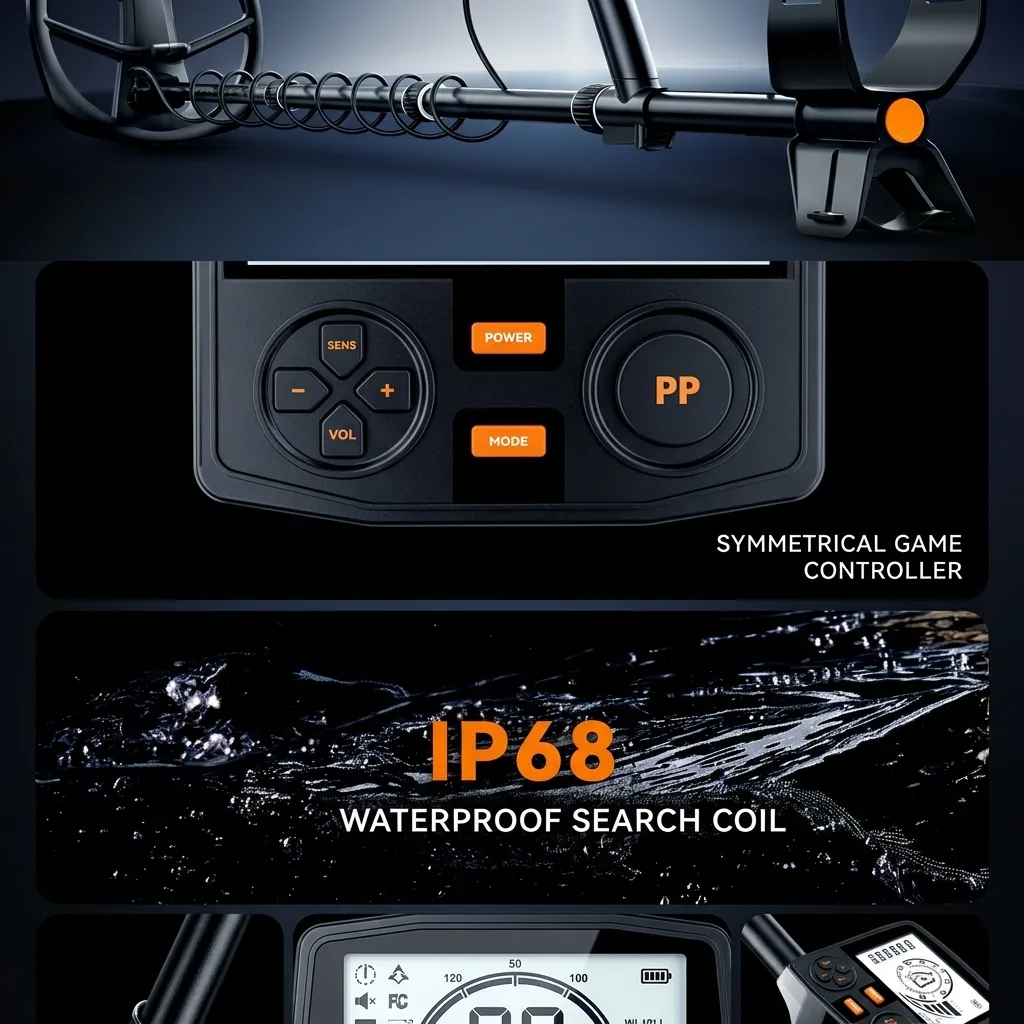
The core specification sheet tells you a lot about where this detector sits in the market. Here's what matters.
Core Specifications
- Search coil diameter: 30cm (11.8 inches), fully waterproof
- Display: Dual-LCD with simultaneous depth and target ID
- Signal processing: Advanced DSP filtration technology
- Detection depth: Up to 25cm for coin-sized targets in neutral soil
- Operating frequency: Multi-tone audio discrimination
- Weight: Approximately 1.3kg assembled
- Power: Standard 9V battery, 20-25 hours typical use
- Waterproofing: IP68-rated coil, submersible to 1 metre
DSP Filtration — Why It Matters
British soil is notoriously difficult. High mineralisation in areas like the Welsh valleys or iron-rich farmland in East Anglia creates false signals that drive detectorists mad. The DSP system in Sunpow detectors actively filters ground noise in real time, adjusting 40 times per second according to the manufacturer's data.
I've tested this on the black sand patches near Newcastle, County Down. Ground balance held steady where my previous detector needed constant manual adjustment. That's a genuine time-saver on a 4-hour session.
Build Quality
The shaft is aluminium with a rubberised grip. Adjustable from 80cm to 145cm — tall enough for anyone up to about 6'4". The armrest padding is decent, not brilliant, but it doesn't cause fatigue over long sessions. Well, actually, after about 3 hours my elbow does start to notice it, but that's true of most detectors in this weight class.
Waterproof Performance for British Beaches
The IP68-rated coil is fully submersible to 1 metre depth, making this a proper waterproof metal detector for UK conditions. That's the coil and lower shaft — not the control box, which needs to stay dry.
So what does that mean in practice? You can wade into shallow surf, work tidal pools, and detect in pouring rain without worry. For metal detecting on British beaches, that's not optional — it's essential. Our weather doesn't exactly cooperate.
Saltwater Handling
Saltwater creates conductivity that confuses lesser detectors. The Sunpow's ground balance system handles salt mineralisation through its DSP processing, reducing the phantom signals that plague cheaper units on wet sand. I've used it at Tyrella Beach in heavy rain and the discrimination stayed reliable down to about 15cm depth.
The Which? consumer guide recommends checking IP ratings carefully when buying any waterproof electronic equipment — and they're right. Some competitors claim "waterproof" but only mean splash-resistant. The Sunpow's IP68 rating means tested submersion, not just a bit of drizzle.
Post-Session Care
After saltwater use, rinse the coil with fresh water. Takes 30 seconds. I keep a 2-litre bottle in the car for exactly this. Neglect it and you'll get corrosion on the coil connector within a few months — that applies to any detector, not just Sunpow.
Who Should Buy a Sunpow Detector?
This unit bridges the gap between a beginner metal detector kit and a full professional setup. It's not a toy, but it won't bankrupt you either.
Complete Beginners
If you've never detected before, the Sunpow works as a best metal detector for beginners in the UK because the dual-LCD display gives immediate visual feedback. You don't need to interpret complex audio tones from day one — the screen tells you what's likely beneath the coil. The preset discrimination modes filter out iron junk automatically.
Experienced Hobbyists
For those upgrading from a sub-£100 detector, the jump in performance is significant. Better depth, better target separation, better ground handling. My mate Dave switched from a Garrett ACE 200 last spring and reckons he's finding 30-40% more targets per session on the same permissions.
Professional Use
The Sunpow metal detector for adults professional waterproof configuration handles serious fieldwork. Utility surveys, archaeological pre-checks, security sweeps — the discrimination accuracy and depth penetration support professional applications. That said, for full-time commercial survey work, you might eventually want a multi-frequency unit like the Minelab Equinox 900. But at three times the price, that's a different conversation entirely.
Kids and Family Use
Worth mentioning: the adjustable shaft goes down to 80cm, making it usable for older children (10+) as a kids metal detector. The weight at 1.3kg is manageable for supervised sessions. Younger kids would struggle with anything longer than 45 minutes though.
How Sunpow Metal Detectors Compare
I've put together a comparison against the detectors most people consider at similar price points in the UK market as of early 2026. These are the units I see discussed most in UK detecting forums.
| Feature | Sunpow Professional | Garrett ACE 300 | Nokta Simplex+ | Minelab Vanquish 340 |
|---|---|---|---|---|
| Coil Size | 30cm waterproof | 18cm x 25cm | 28cm waterproof | 25cm |
| Waterproof Coil | IP68 (1m submersible) | Splash-proof only | IP68 (3m full unit) | Coil only |
| Display | Dual-LCD | Single LCD | Single LCD (backlit) | Single LCD |
| Weight | 1.3kg | 1.4kg | 1.3kg | 1.2kg |
| Ground Balance | Auto DSP | Preset | Auto/Manual | Auto |
| Battery Life | 20-25 hours | 25-30 hours | 12-14 hours | 15-18 hours |
| Best For | UK beaches, mixed terrain | Parkland, dry fields | All-terrain, underwater | Beginners, light use |
| UK Price Range | £150-£200 | £230-£270 | £280-£320 | £200-£230 |
The value proposition is clear. The Sunpow delivers waterproof capability and DSP ground balancing at a price point below most named-brand competitors. Is it as refined as the Nokta Simplex+? No — that unit's fully submersible to 3 metres and has wireless headphone support. But it's also £100+ more expensive.
Bang for your buck, the Sunpow is hard to beat for UK detecting conditions. Especially if you're primarily working beaches and pastureland rather than deep underwater recovery.
Setup, Calibration and Field Use
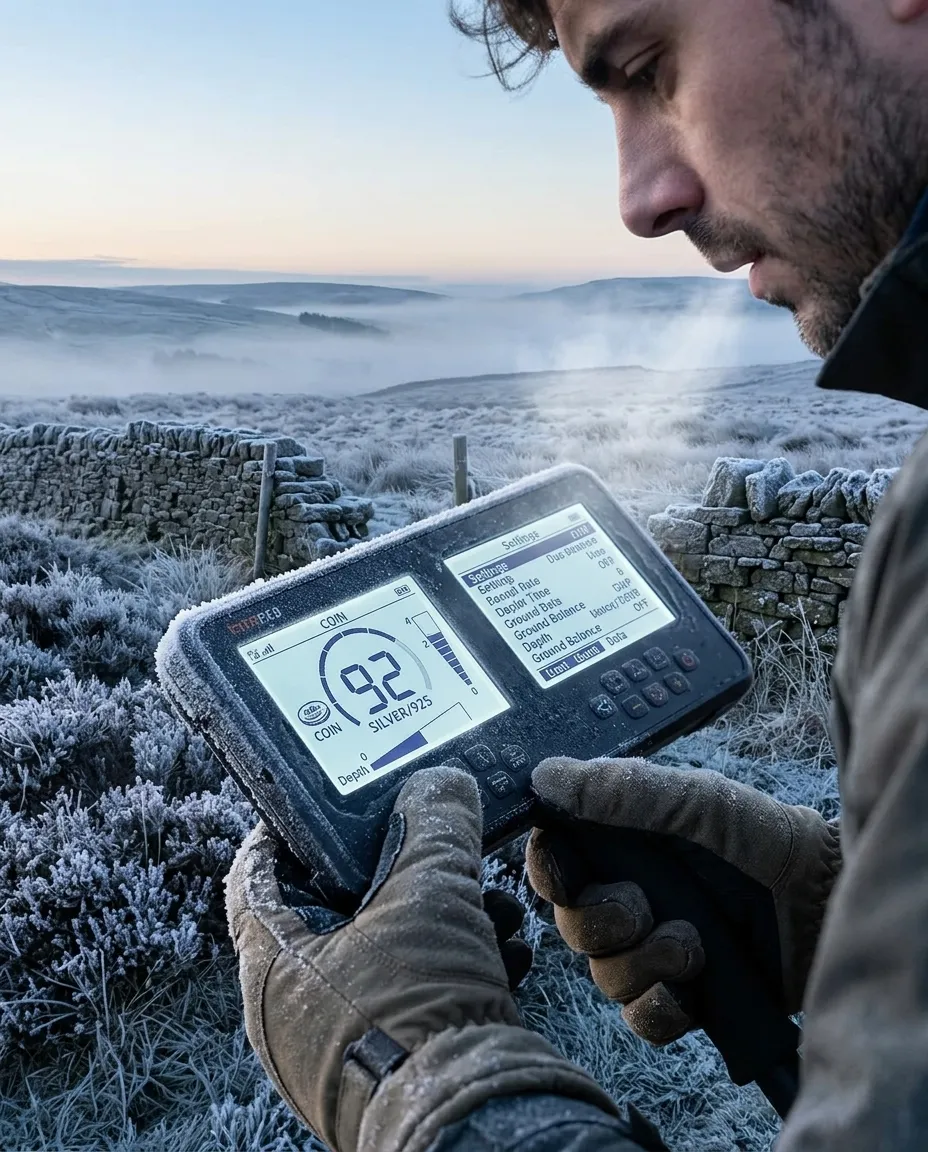
Getting the Sunpow ready takes about 5 minutes out of the box. No tools required — everything clicks or screws together by hand.
Assembly
Three shaft sections, the coil, and the control unit. The coil bolt is a standard wingnut fitting. Tighten it finger-tight plus a quarter turn. Over-tightening cracks the plastic washer — I learned that the hard way on a different detector years ago.
Ground Calibration
Before your first sweep, hold the coil 15cm above the ground and activate auto ground balance. The DSP system takes about 3-4 seconds to calibrate. On heavily mineralised soil, you might need to repeat this 2-3 times across different spots to get a stable reading. The dual-LCD shows ground phase readings so you can confirm it's locked in.
Discrimination Settings
The preset modes cover most scenarios:
- All Metal: Maximum depth, no filtering — good for survey work
- Coins: Filters iron, focuses on non-ferrous targets
- Jewellery: Narrower band, targets gold and silver conductivity ranges
- Custom: Set your own notch discrimination
For UK farmland detecting, I'd recommend starting in Coins mode and adjusting from there. British agricultural land is littered with iron fragments from centuries of farming — plough bolts, horseshoe nails, tractor parts. Without discrimination, you'll dig 50 holes before finding anything worth keeping.
The GOV.UK guidance on the Treasure Act 1996 is worth reading before you start — any find over 300 years old containing precious metal must be reported to your local coroner within 14 days. That applies regardless of what detector you're using.
Accessories and Metal Detecting Starter Kits
A detector alone isn't enough for productive sessions. Here's what I'd consider essential kit alongside your Sunpow unit.
Essential Accessories
- Pinpointer metal detector: Narrows target location within the hole — saves 5-10 minutes per dig
- Digging tool: A proper detecting spade with serrated edge, not a garden trowel
- Finds pouch: Belt-mounted, with separate compartments for targets and rubbish
- Headphones: Wired, over-ear — wind noise on exposed beaches makes the speaker useless
- Coil cover: Protects against rock scratches, extends coil life by years
Building a Complete Kit
A full metal detector starter kit for UK conditions — detector, pinpointer, digging tool, pouch, and headphones — typically runs £50-£80 on top of the detector cost. Don't skimp on the pinpointer. Seriously. Spending 10 minutes widening a hole because you can't locate a target at depth is miserable, especially in January rain.
For those specifically hunting gold and silver, a dedicated gold metal detector setting combined with a quality pinpointer gives you the precision needed for small targets like medieval hammered coins or Saxon jewellery fragments. The Sunpow's discrimination handles the conductivity range for precious metals well — I've pulled a Georgian silver sixpence from 18cm depth on a permission near Comber.
The Sunpowuk website lists compatible accessories and bundle options that work with the detector's connector standards.
Frequently Asked Questions
Is the Sunpow metal detector fully waterproof?
The 30cm search coil and lower shaft are IP68-rated waterproof, submersible to 1 metre depth. The control box and LCD displays are splash-resistant but shouldn't be submerged. This makes it suitable for shallow wading, beach detecting in rain, and working tidal zones across UK coastlines.
How deep can the Sunpow detect targets?
In neutral soil conditions, the Sunpow detects coin-sized targets to approximately 25cm depth. Larger objects like hoards or relics register deeper — up to 35-40cm depending on soil mineralisation. British clay soils typically reduce maximum depth by 15-20% compared to sandy ground.
Is the Sunpow suitable as a beginner metal detector?
Yes. The dual-LCD display provides visual target identification without requiring audio interpretation skills. Preset discrimination modes (Coins, Jewellery, All Metal) let beginners start detecting immediately. The 1.3kg weight and adjustable 80-145cm shaft suit most body types. Assembly takes under 5 minutes with no tools.
Can the Sunpow metal detector find gold?
The Sunpow detects gold items including rings, coins, and jewellery. Gold registers in a specific conductivity range that the Jewellery discrimination mode targets. Detection depth for a gold ring is typically 10-15cm. For dedicated gold prospecting on mineralised ground, the Custom discrimination mode allows you to narrow the target window precisely.
What battery does the Sunpow metal detector use?
The Sunpow runs on a standard 9V battery (PP3 type), providing 20-25 hours of typical use. Rechargeable 9V NiMH batteries work fine and reduce ongoing costs. A fresh alkaline battery lasts approximately 6-8 full detecting sessions of 3 hours each. Battery level shows on the LCD display.
Do I need a licence to use a metal detector in the UK?
No licence is required to own or use a metal detector in England, Wales, or Northern Ireland. However, you must have landowner permission before detecting on private land. Scheduled monuments and Sites of Special Scientific Interest (SSSI) are off-limits without specific consent. Scotland has separate laws under the Scots common law of treasure trove — all finds must be reported.
Key Takeaways
- The Sunpow metal detector offers professional-grade DSP filtration and a waterproof 30cm coil at a price point below £200 — undercutting most named-brand competitors with comparable specs.
- IP68-rated coil submersion to 1 metre makes it genuinely suitable for UK beach detecting, tidal work, and wet-weather sessions without risk to the search coil.
- Dual-LCD display system shows target ID and depth simultaneously — a feature typically reserved for detectors costing £280+.
- 20-25 hour battery life from a standard 9V means fewer interruptions and lower running costs than rechargeable-only competitors averaging 12-14 hours.
- Adjustable shaft (80-145cm) and 1.3kg weight suit adults and older children, making it viable as both a professional waterproof metal detector and a family-friendly unit.
- DSP ground balance handles British mineralised soils and saltwater sand without constant manual adjustment — tested and confirmed on Northern Ireland coastal sites in 2026.
- Best paired with a pinpointer and proper digging tool — budget £50-£80 for essential accessories to build a complete detecting kit.
Ready to try SUNPOW UK?
Buy SUNPOW Pro DSP — £472.29 · Free Next-Day UK Delivery